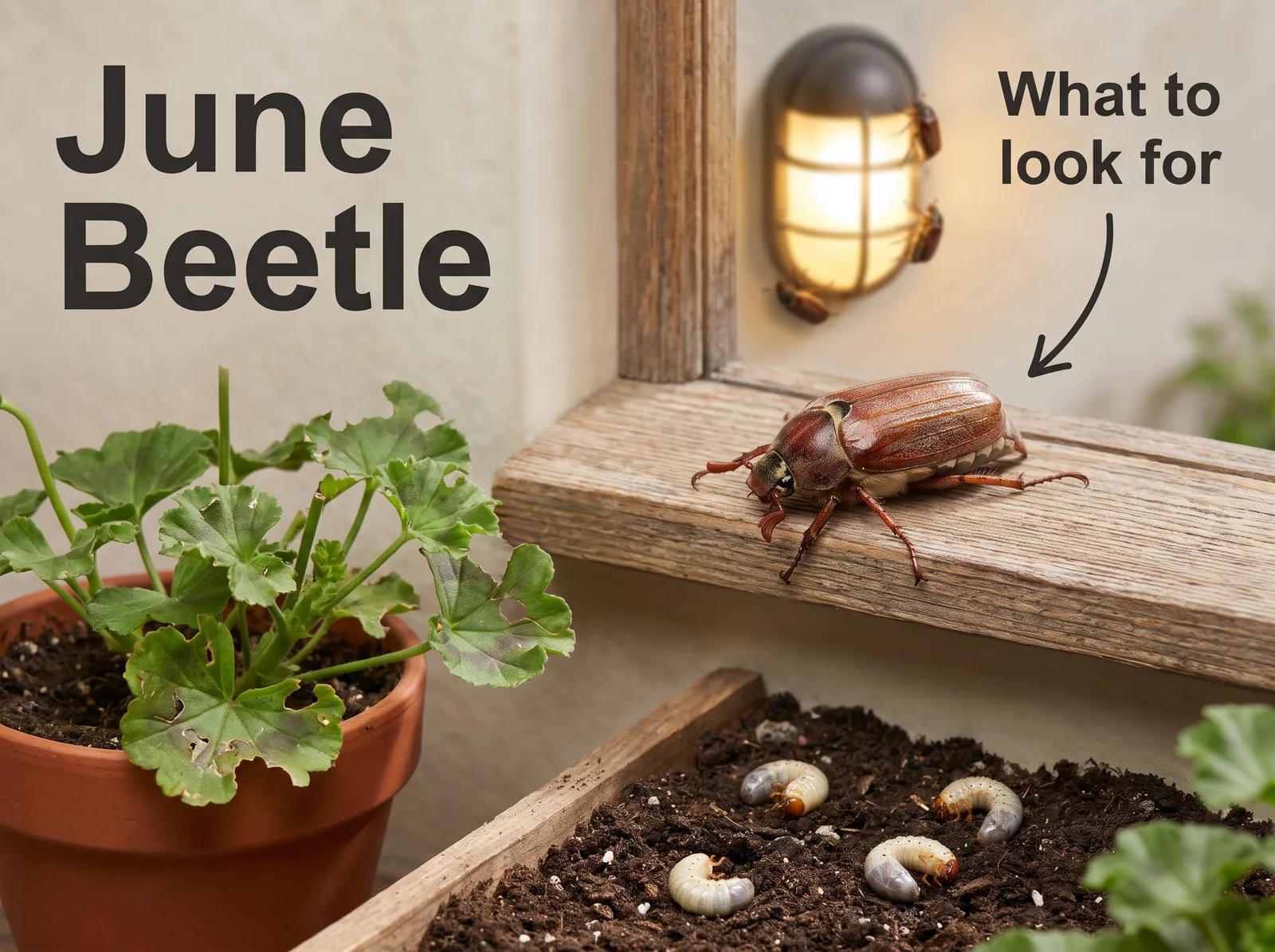
What should you do on the first day you notice June beetles?
Start by turning off unnecessary outdoor lights at night. June beetles are pulled toward bright porch lights and lit windows, and cutting that draw is the fastest way to reduce numbers hitting your house tonight.
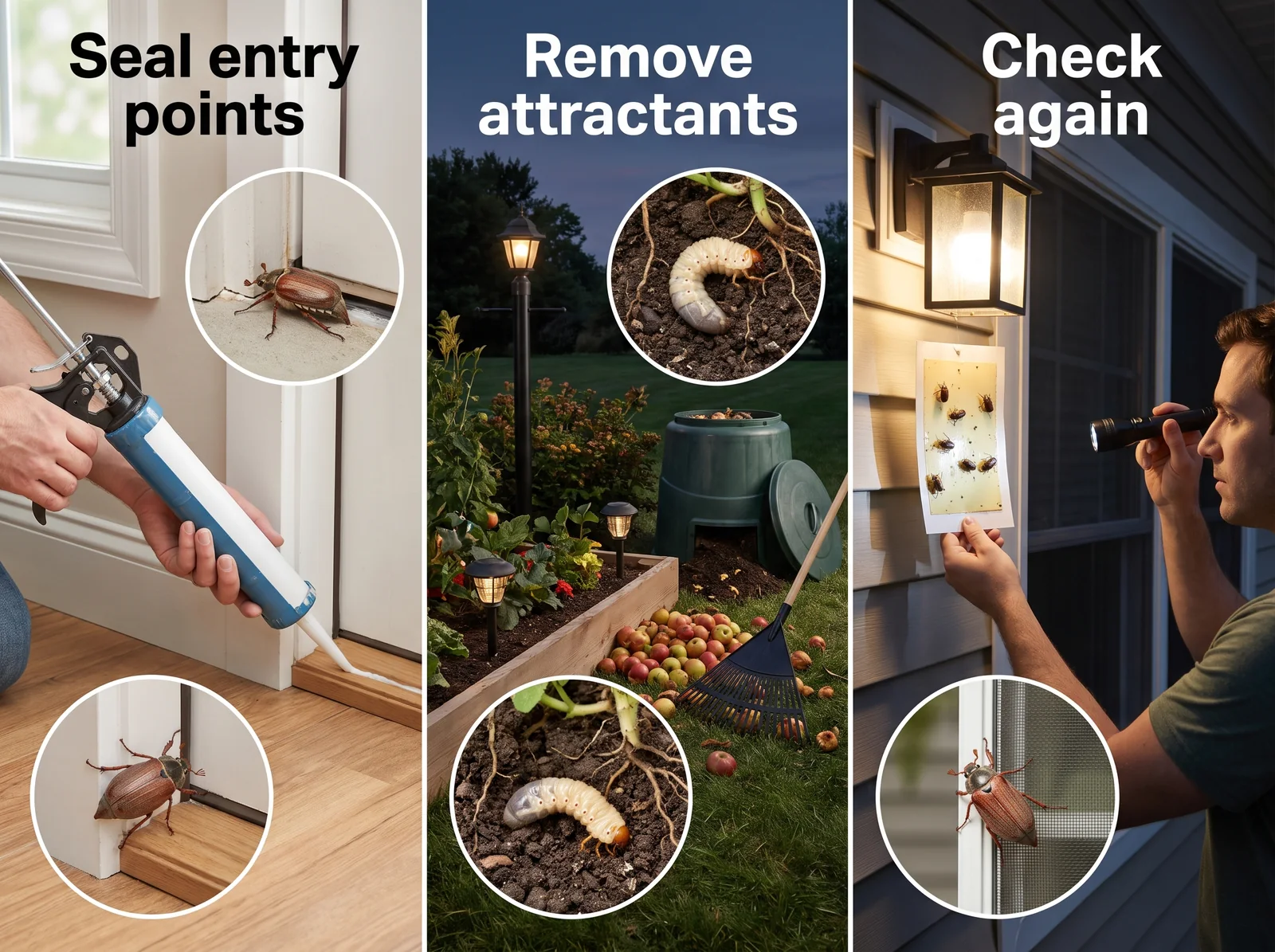
Next, do a quick walk around your home's exterior. Check screens, door sweeps, and any gaps around windows where beetles could slip inside. If you find a few indoors, a cup and piece of paper is enough to release them outside.
Avoid reaching for a pesticide spray right away. Most first-night activity is adults passing through or drawn by light, not a structural infestation. Confirming the pest and finding the source matters more than immediate treatment.
If you're seeing large numbers repeatedly, jot down where and when you see them. That pattern will help you figure out whether this is a lighting issue, a lawn grub issue, or both.
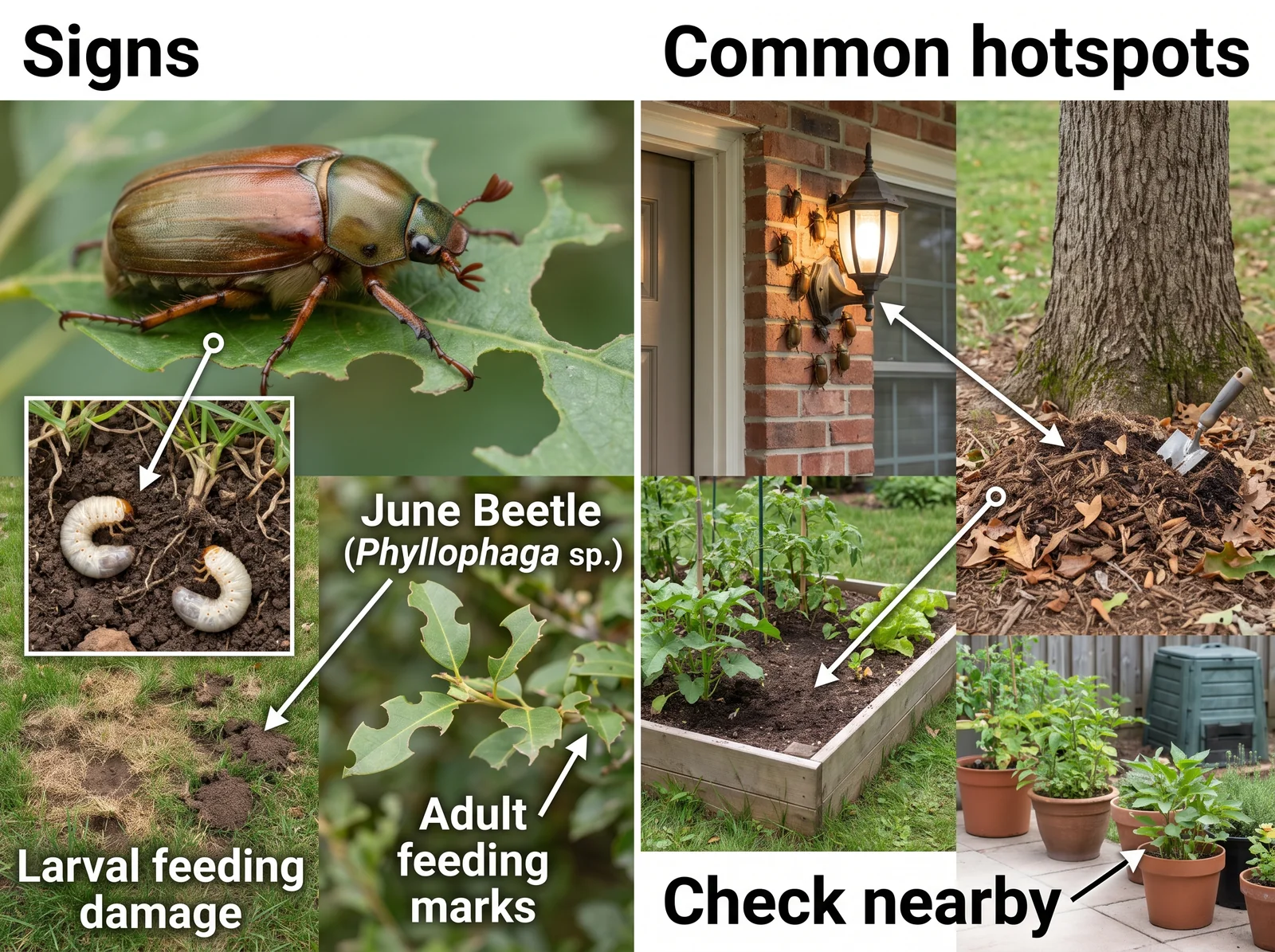
How do you confirm it's actually a June beetle?
June beetles are stout, oval, and usually brown or tan, roughly half an inch to an inch long. They fly clumsily, often bumping into windows or walls, and they're most active around dusk in late spring and early summer.
Their larvae, called white grubs, are C-shaped, cream colored, with a brown head, and live in soil rather than on plants or indoors. If you're digging in turf and finding these, that's the immature stage of the same insect.
It helps to rule out lookalikes before you decide how to get rid of June beetle activity. Other beetles, like Japanese beetles, are smaller and metallic green, while June beetles are duller and larger-bodied.
If you're unsure, a clear photo compared against a reliable identification source saves you from treating the wrong pest or wasting effort on the wrong control method.
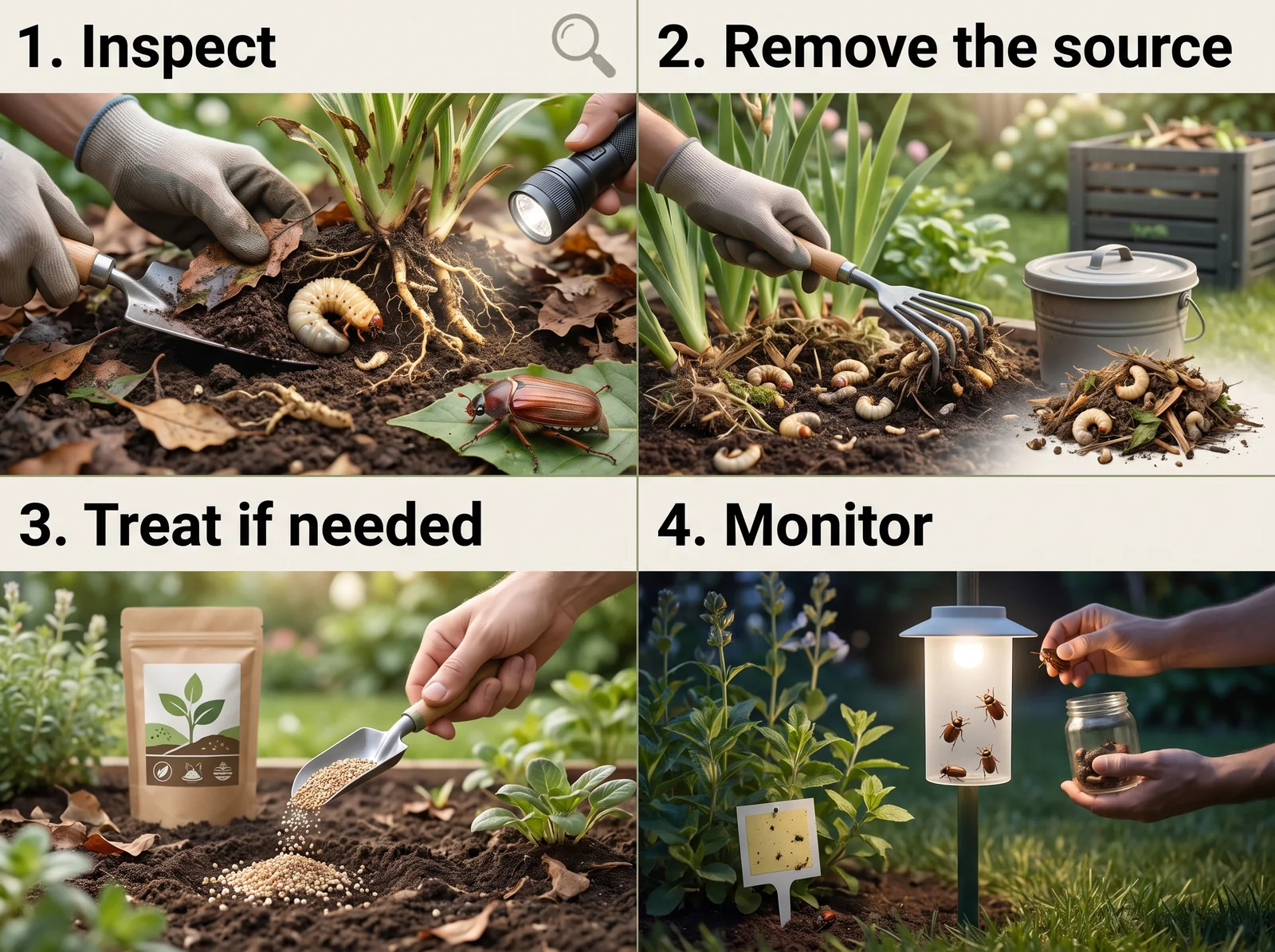
Where should you inspect to find the source?
Start outside near light fixtures, since adults gather where illumination is brightest. Check porch ceilings, window wells, and any spot where you've noticed beetles clustering after dark.
Move to your lawn next. Grubs favor well-watered turf with thick grass, so inspect areas that feel spongy or that show brown, irregular patches. Peel back a small section of sod and look for grubs in the top few inches of soil.
Check gaps around foundation vents, unsealed utility penetrations, and door thresholds. These are common entry points for adults trying to escape outdoor light or heat.
Keep notes on where you find the most activity. This inspection step is what actually points you toward the right removal method rather than a generic one.
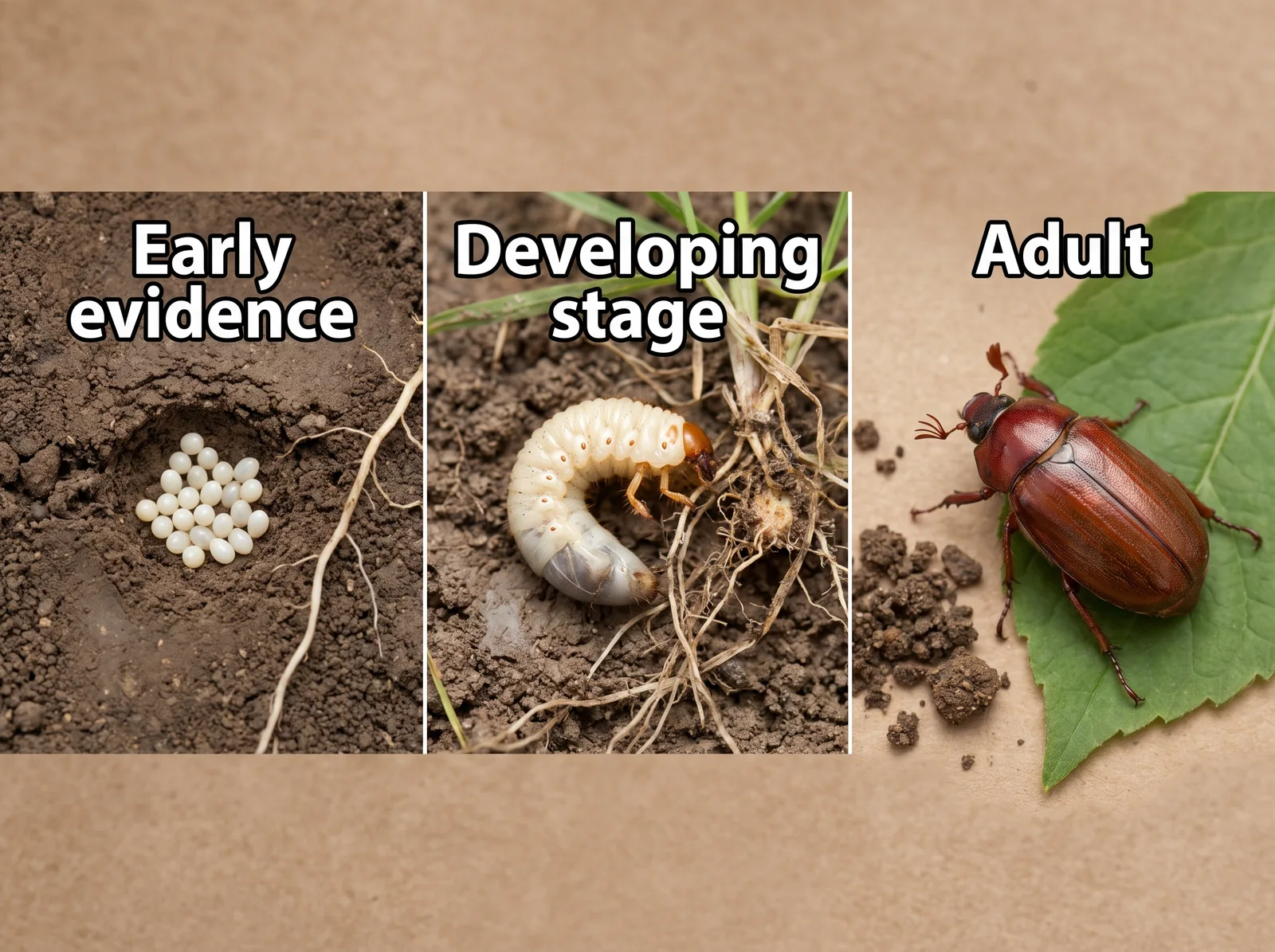
What are the best ways to remove June beetles?
Source removal comes first. If grubs are damaging your lawn, reducing excess watering and maintaining a healthy mowing height makes turf less attractive to egg-laying females next season.
Exclusion is your next tool. Seal gaps around windows, doors, and vents, and repair torn screens. This keeps adults from getting inside even if they're active in large numbers outside.
For adults already indoors, physical removal works well: a cup, a vacuum, or simply opening a door and encouraging them out. Reducing outdoor lighting or switching to yellow bug-style bulbs also cuts down how many are drawn to your home.
If grub damage is severe and cultural steps aren't enough, pesticide treatment may be appropriate. In that case, use only an EPA-registered product labeled for June beetle grubs or adults and the exact site you're treating, and follow the complete label instructions from start to finish.
- Turn off or dim outdoor lights at dusk
- Seal gaps around doors, windows, and vents
- Hand-remove adults indoors rather than spraying
- Check lawn moisture and mowing height
- Use only label-listed pesticide products if treatment is needed
How do you monitor after taking action?
Give your changes a week or two before judging results. Adult activity naturally rises and falls with the season, so a single quiet night doesn't mean the job is done, and a busy night doesn't mean it failed.
Keep tracking where you see beetles gathering. If they're consistently at one light or one entry point, that's useful information for tightening exclusion there specifically.
For lawn grubs, recheck the same patches every few weeks during the season. Fewer grubs per square foot and improving turf color are good signs your approach to get rid of June beetle larvae is working.
If numbers climb instead of dropping, revisit your inspection. You may have missed an entry point, a bright light source, or a particularly moist section of lawn that's still attracting egg-laying adults.
How can you prevent June beetles from coming back?
Lighting changes make the biggest long-term difference. Motion-activated lights, lower-wattage bulbs, or simply turning off porch lights when not needed all reduce the draw that brings adults to your doors and windows.
Lawn care matters just as much. Avoid overwatering, since consistently moist soil is exactly what egg-laying females look for. Mowing at a proper height and keeping thatch thin also makes your yard less inviting to larvae.
Exclusion upgrades, like new door sweeps, repaired screens, and sealed gaps around siding, keep working season after season with no ongoing effort from you.
Routine yard cleanup, including removing piles of leaves or grass clippings, limits the soft, moist ground cover that grubs prefer for shelter.
Are June beetles dangerous to children or pets?
June beetles don't bite or sting, and they're not known to carry disease. Their biggest impact on people is being a startling, clumsy nuisance around porches and windows at night.
Pets sometimes try to catch or eat beetles or grubs. This usually isn't dangerous, but swallowing a lot of hard beetle shells can occasionally cause mild stomach upset, so it's worth discouraging the habit.
If you use any pesticide product to manage grubs or adults, keep children and pets away from the treated area exactly as long as the product label specifies. This isn't optional, and label timing varies by product.
For most households, June beetles are more of an annoyance than a real safety concern, and simple exclusion and lighting changes handle the issue without any need for chemical treatment.
When does this need professional help?
If your lawn shows widespread grub damage across large areas, not just a patch or two, a professional can assess soil conditions and recommend a plan suited to your property.
Recurring heavy adult activity year after year, despite lighting changes and exclusion work, suggests something in your yard is consistently attractive to egg-laying beetles, and a professional inspection can pinpoint what.
If you're not confident identifying grubs correctly, or you're unsure whether damage is from June beetles or another turf pest, getting a professional opinion prevents wasted time and effort.
Anytime treatment would need to cover a large area, involve products you're unfamiliar with, or address a well-established grub population, a licensed pest professional is the safer route to actually get rid of June beetle problems for good.
Questions you may still have
How do I get rid of June beetle grubs in my lawn?
Start by confirming grubs are present through a soil check, then adjust watering and mowing habits, since moist, thick turf is what attracts egg-laying beetles. Reducing excess irrigation and keeping grass at a healthy height makes your lawn less appealing for the next generation. If grub numbers are heavy and damage is widespread, an EPA-registered product labeled for grubs, used exactly per its label, or a licensed lawn care professional can help bring numbers down.
Why do June beetles keep coming to my porch light?
Adult June beetles are strongly attracted to bright light sources, especially at dusk when they're most active. Porch lights, lit windows, and other exterior fixtures act like a beacon. Switching to motion-activated lighting, dimmer bulbs, or simply turning lights off when not needed cuts down on this activity significantly and is one of the most effective, low-effort prevention steps available to you.
Can June beetles damage my house?
June beetles don't chew through wood, wiring, or structural materials, so they aren't a threat to your home's construction. Their impact is mostly a nuisance from clumsy flying and clustering near lights. The real property concern is grub damage to lawns, which can leave patchy, weakened turf if populations go unchecked over a season or two.
Is it safe to vacuum up June beetles indoors?
Yes, vacuuming or scooping them into a cup for release outside is a safe, simple removal method. It avoids the need for any spray indoors and works well for occasional adults that wander in through open doors or gaps. If you're seeing large numbers indoors repeatedly, that points to an entry point worth sealing rather than a problem vacuuming alone will solve.
How long does June beetle season last?
Adult activity is typically heaviest for a few weeks in late spring through early summer, tapering off as adults complete their short lifespan. Grubs, however, can remain in soil for close to a year before maturing, so lawn-focused prevention steps are worth maintaining beyond the weeks you see adults flying around lights.